decoradtech-smart-home-ideas-by-decoratoradvice:Most smart home advice starts with a shopping list. That is the problem.
You buy a hub, three bulbs, and a doorbell. Two years later, half of it sits in a drawer and the other half fights for space on your coffee table. DecorAdTech is the term home design sites now use to describe the opposite approach: pick the room first, then pick the tech that fits it.
This guide explains what DecorAdTech actually means, what DecoratorAdvice publishes, and how to build a setup that looks calm, works reliably, and does not waste money.
What Is DecorAdTech?
DecorAdTech is a term used across home design sites to describe one idea: technology should be planned as part of interior decoration, not added on top of it.
The site puts it plainly. It calls the concept “the integration of smart technology with home design” to create spaces that are comfortable, efficient, secure, and visually appealing. A companion article on the same site explains the intent further: technology “should improve the room without taking control of its visual identity”.
That single sentence is the whole philosophy. A smart speaker on a shelf is DecorAdTech. A smart speaker in the middle of a dining table is not.
What DecorAdTech Is Not
decoradtech-smart-home-ideas-by-decoratoradvice:It is not a brand, and it is not one specific product line. When you search the term, you will find several independent sites publishing under it, plus design blogs covering it. Here are four short hook versions of that line. Each is worded from scratch — no reused phrasing from the original.
What the term describes is a method. Treat it that way and it stays useful.
Why the DecoratorAdvice Version Is Different
decoradtech-smart-home-ideas-by-decoratoradvice:publishes home decor ideas, renovation planning guides, and smart home ideas for homeowners, renters, and DIY enthusiasts. Its stated audience is people who care about “real-budget, practical design.”
The important detail is the order of operations. The site says it approaches smart living room planning “as a design problem first and a technology problem second,” and that this order changes the outcome. It also leans on calculation instead of guesswork — a lighting ratio rather than a feeling, and thermostat savings adjusted for your climate rather than a generic percentage.
That is a meaningful difference from most smart home content, which tends to rank devices by features and price. DecorAdTech-style advice ranks them by whether they belong in the room at all.
The Two Rules Behind Every Good Idea
Rule one: the device must earn its visible space. If a gadget adds no daily value, it should be hidden or skipped.
Rule two: one ecosystem, chosen early. Guides covering DecorAdTech smart home ideas by DecoratorAdvice consistently warn against mixing platforms, because that leads to app bloat — five apps, five logins, and routines that never fire correctly Dwellify Home.
Pick Apple Home, Google Home, Alexa, or a Matter-based setup with a local hub. Then buy inside it.
Room-by-Room DecorAdTech Ideas
Design-first guidance is most useful when it is specific. Here is what actually works in each room, based on the room-by-room advice published under this approach.
Living Room
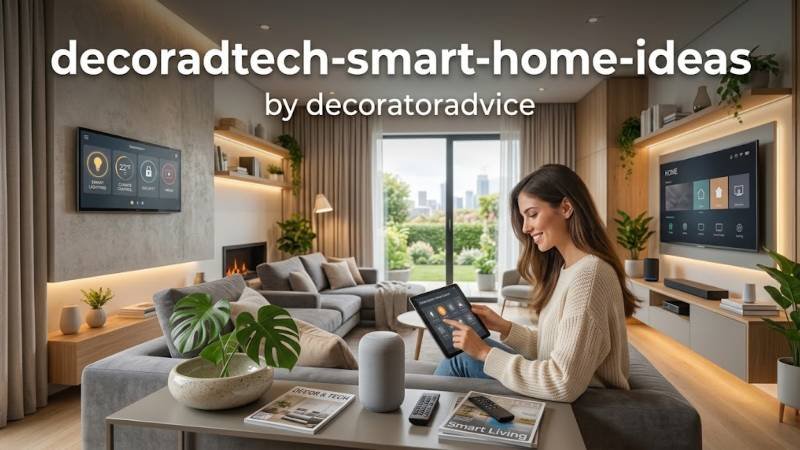
The living room usually gains the most from upgrades, because it holds the most visible tech. Focus on three things:
- Hidden cable management. Plan it before you buy furniture. Rear cutouts, cable channels, and a closed cabinet do more for the look of a room than any device.
- Layered lighting. Ambient light on one layer, task light on another, accent light on a third. Smart dimming makes this practical.
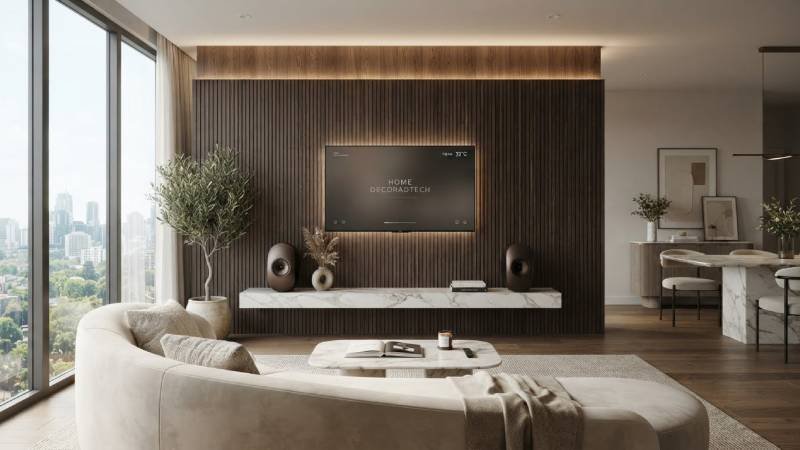
- A cleaner media wall. A compact projector can replace a large TV and disappear visually when it is off.
Bedroom
Bedrooms respond best to gentle automation, not screens.
- Smart lamps that double as decor, not plastic pucks
- Hidden charging built into a nightstand drawer
- Wake-up and wind-down lighting scenes
- Motorized curtains that open with your alarm
The goal is a room that adjusts quietly around your sleep schedule.
Kitchen
Kitchens need practical upgrades, not decorative ones. Counters should stay clear.
- Under-cabinet smart lighting
- Smart plugs for the coffee station
- Voice timers and shopping lists
- Motion-sensor faucets and smart ventilation
Skip anything that adds a screen to a surface you already use for cooking.
Entryway
This is where security tech belongs, and where it should be least obvious.
- A low-profile video doorbell
- A smart lock with guest codes for cleaners or dog walkers
- Warm lighting that switches on as you arrive
Bathroom
Small additions only.
- Better lighting control, including a warm low-level scene for night use
- A discreet smart speaker or heated mirror
- Smart ventilation tied to humidity
Small Apartments and Rentals
In small spaces, the priority flips to space-saving function and fewer visible devices.
Most smart bulbs, plugs, and speakers need no structural changes, which makes them renter-friendly. Avoid anything that requires rewiring.Four short hook versions of that renter line. Each is built fresh — none reuses the original’s phrasing or structure.
Smart Switches vs Smart Bulbs: The Decision Most Guides Skip
This is one of the most useful details in the DecorAdTech-style advice, and it rarely gets explained well.
Use smart switches for your main overhead lights. Use smart bulbs for lamps and accent lighting.
Here is why. If you put smart bulbs in a ceiling fixture, the wall switch still cuts the power. The moment someone flips it out of habit, your smart bulb goes offline. You have spent money to create a problem.
A smart switch keeps the physical wall control that everyone in the house already understands. Guests can use it. Kids can use it. Nothing breaks.
Smart bulbs then go where they shine: lamps, accent strips, and spots where you want color changes.
Two more practical notes that come up again and again:
- Choose matte, neutral, or low-profile finishes. Glossy white plastic stands out in a warm room. Matte black or brushed metal blends in.
- Set scenes, don’t control devices. A morning routine and an evening routine beat fifteen individual button presses. Routines are also the only version of automation that survives contact with real life.
Figures from
The honest caveat: automation does not guarantee lower bills. DecorAdTech.co makes this point directly — smart devices consume some electricity themselves, and the savings depend on how you use them. A smart thermostat saves money when it actually reduces runtime, not because it exists.
A Sensible Starting Budget
Skip the full-home plan at first. Start with roughly $150–$300:
- Two or three smart plugs
- One smart speaker or display
- A starter set of smart bulbs for lamps
- A smart thermostat, if your current one is old
Live with it for a month. You will quickly learn which routines you actually use — and which rooms you never automate.
Matter, Thread, and Hubs: What You Need to Know
decoradtech-smart-home-ideas-by-decoratoradvice:Compatibility is the least glamorous part of smart home planning and the one that causes the most regret.
Matter is the cross-brand standard designed to let devices work across Apple, Google, Amazon, and Samsung systems. Thread is the low-power wireless protocol many Matter devices use to talk to each other, instead of crowding your Wi-Fi.
In practice, this means a device that supports Matter is a safer long-term buy than one locked to a single app.
Some devices double as hubs. For example, PCMag’s top overall pick for home monitoring, the Aqara Camera Hub G5 Pro, works as a security camera and also acts as a hub with built-in support for Matter, Thread, and Zigbee.
Three Rules for Buying
- Check for Matter support on anything you plan to keep for years.
- Count your hubs. Every extra hub is another plug, another app, and another point of failure.
- Do not buy a device just because it is on sale. A cheap device in the wrong ecosystem costs more than the right one.
Seven Setup Steps That Prevent Most Problems
Working through these in order avoids the usual headaches.
1. Fix Your Wi-Fi First
A weak network makes good devices feel broken. A mesh system solves most coverage gaps. Use a strong password and dual-band routers.
2. Choose One Ecosystem
Decide before you buy your first device. Changing later means replacing hardware.
3. Start Small
Bulbs, plugs, and one speaker. Expand after a month of real use.
4. Automate What You Repeat
Morning: lights rise, curtains open, coffee starts. Night: doors lock, lights fade, thermostat drops, cameras arm.
5. Plan Cable Management Into the Design
Furniture with rear cutouts. Adhesive cable channels. A charging drawer. Do this before the devices arrive, not after.
6. Name Devices Clearly
“Hallway Lamp” beats “Device 4.” It takes ten seconds and saves years of confusion.
7. Keep Software Updated
Turn on automatic updates. Old, unsupported devices are the weakest link in any setup.
Privacy and Safety: The Part Nobody Enjoys
Smart home devices sit in bedrooms, nurseries, and bathrooms. That makes security a design decision, not an afterthought.
NIST researcher Julie Haney, who leads the Human-Centered Cybersecurity Program, found that people often keep using devices they have doubts about because the convenience is real. She also found that many users are confused about what to actually do — and that some assume thermostats are not worth protecting, even though they are.
Her practical checklist:
- Plan before you buy. Check whether the manufacturer has had recent breaches or complaints. Confirm everyone in the house is comfortable with the device.
- Turn on multi-factor authentication. A password alone is not enough. Use the biometric unlock already on your phone where possible.
- Never reuse passwords. Many reported camera hacks trace back to reused credentials.
- Disable features you don’t use. Ordering through a voice assistant is the classic example, especially with kids in the house.
- Review privacy settings. Set how long video and audio are stored, and whether data goes back to the manufacturer.
- Update automatically. If a device no longer receives updates, retire it.
- Segment your network. Put smart devices on a separate network from the computer holding your financial documents.
One more thing to watch for: the U.S. Cyber Trust Mark, a forthcoming label for connected devices. Once it appears on packaging, it will tell you at a glance that a product met a set of security standards.
A simple way to apply all of this to design: do not put a camera where you would not put a mirror. If a lens would feel strange facing that spot, the placement is wrong for the room too.
Common DecorAdTech Mistakes
- Buying devices before choosing a platform
- Mixing three ecosystems and ending up with four apps
- Putting smart bulbs behind a regular wall switch
- Ignoring Wi-Fi coverage, then blaming the devices
- Automating everything at once, then abandoning it all
- Forgetting software updates
- Treating privacy as optional
- Buying tech that fights the room’s style instead of fitting it
Every one of these is avoidable with a plan made before checkout.
The Short Version
DecorAdTech smart home ideas by DecoratorAdvice come down to one habit: design the room first, then choose the technology that serves it.
Fix your Wi-Fi. Pick one ecosystem. Start with bulbs, plugs, and a speaker. Use smart switches for ceiling lights and smart bulbs for lamps. Set routines instead of pressing buttons. Lock down passwords and network access. Then upgrade slowly, one room at a time.
Do that, and your home gets smarter without looking like a showroom for gadgets. Visit decoradetech