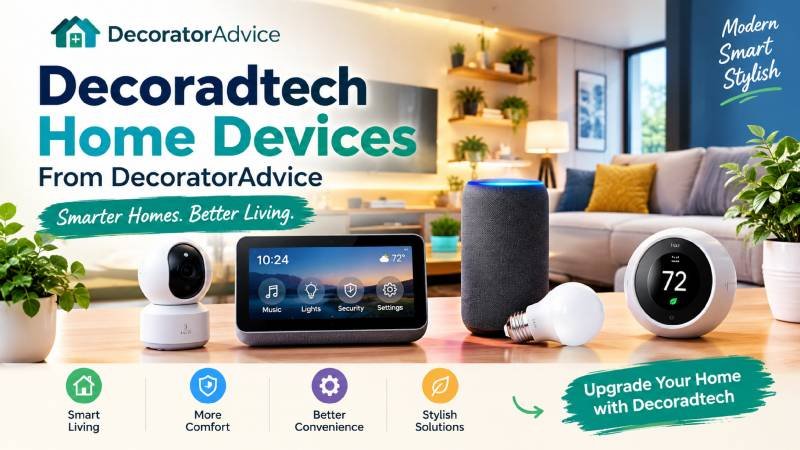
Decoradtech Home DevicesFrom DecoratorAdvice: Smart home gear often looks like it belongs in an office. Black boxes, blinking lights, tangled cables. Decoradtech home devices take the opposite path. They blend into your rooms instead of fighting them.
This guide explains what these devices are, which ones are worth your money, and how to set them up without stress.
What Are Decoradtech Home Devices?
Decoradtech Home DevicesFrom DecoratorAdvice: Decoradtech is not a big brand you will find on a store shelf. It is better described as a design-first approach to smart homes. One review site calls it smart-home technology that respects your decor, meaning tech that blends into the room instead of cluttering it
The name comes from two ideas joined together: decoration and technology. DecoratorAdvice brought the design side, while the decoradtech concept brought the hardware and automation logic
Decoradtech Home DevicesFrom DecoratorAdvice: It is worth being honest here. Tech writers note that “smart home decoradtech” is an emerging online term, not an official industry standard. Different sites use it to mean a brand, a platform, or simply the mix of decor and technology . So when you see this phrase online, think of it as a style of building a smart home, not one product line.
The core idea is simple. You get comfort, automation, energy savings, and security. You skip the visual mess.
The Main Device Categories
Most decoradtech setups use the same groups of devices. Each one solves a specific problem.
Smart Lighting
Lighting is the usual starting point. It has the biggest visual impact and the lowest risk. Options include smart bulbs, smart switches, LED strips, and motion sensors.
One practical tip stands out. Smart switches often beat visible smart bulbs, because the fixture stays the same and the tech hides behind the wall plate . Your decor stays untouched.
Smart Plugs
Smart plugs cost little and turn ordinary things into smart things. Lamps, fans, coffee makers, and heaters can all run on a schedule or respond to voice . They also cut standby power, which trims your bill a little every day.
Thermostats and Climate Control
Smart thermostats learn your routine. They notice when you are home, what temperature you like, and how sunlight hits your rooms. One setup described by reviewers cut heating output automatically whenever direct sun warmed the room . If your budget is tight, this category gives the most value back.
One design warning: keep the changes gentle. Aggressive temperature swings make people override the schedule, and then the automation is useless .
Security Devices
This group covers video doorbells, smart locks, cameras, motion sensors, leak detectors, and smart smoke alarms. The decoradtech rule is restraint. Pick discreet designs, place cameras carefully, and keep a physical backup such as a key or keypad in case the power or internet fails .
Speakers, Hubs, and Voice Assistants
These are the control centers. Lights, thermostats, and locks all answer to them . Choose matte finishes and neutral colors so speakers sit quietly in a room instead of shouting for attention.
Motorized Blinds and Curtains
Automated window treatments add privacy and trim energy use. The catch: the technology should support your window style, not force an ugly fabric or a bulky housing .
Kitchen and Cleaning Devices
Kitchens work best with practical tech, not gadgets. Under-cabinet lighting, voice timers, leak sensors, and robot vacuums earn their place. Countertop display pieces usually do not .
How to Choose Devices That Fit Your Decor
Here is where the decoradtech approach really differs from a normal tech buying guide.
- Match finishes, not just features. Pick matte and neutral finishes over glossy plastic. Skip oversized hubs.
- Plan cable management from day one. Furniture with hidden channels and built-in charging makes a bigger difference than any single gadget.
- Use the four hiding tricks. Display attractive devices, blend them with matching finishes, recess them into shelves or niches, or hide them inside furniture. Just keep access for repairs and signal, and never hide a camera or sensor in a way that misleads people in the home.
- Keep manual controls. Lights and locks should still work by hand when the internet drops
How to Start: A Simple Plan
You do not need to automate the whole house at once. In fact, you should not.
1. Name the problem first. Dark hallway? Drafty bedroom? Wasted minutes every morning? Buy for that problem, not for novelty.
2. Fix the Wi-Fi. A stable network is the foundation. Mesh systems and dual-band routers stop most connection complaints .
3. Pick one ecosystem. Choose Apple Home, Google Home, or Amazon Alexa, and stick with it. Mixing brands works better when devices share a protocol like Matter or Thread . Matter 1.5 now covers more device types, including cameras, closures, and energy management .
4. Start with one room. Lighting and plugs first. Climate control next. Security and entertainment after that .
5. Add simple routines. Morning: curtains open, lights up, coffee on. Leaving: doors locked, lights off, cameras on. Evening: lights dim, entertainment ready. Two or three routines are enough at the start.
6. Review after a few weeks. Remove anything that adds complexity without adding value. This step is the one most people skip.
Room-by-Room Ideas
- Living room: Layered lighting, hidden cables, and a clean media wall give the fastest payoff.
- Bedroom: Warm-toned hidden light, gentle wake scenes, and motorized curtains keep the space calm.
- Kitchen: Under-cabinet lighting, smart plugs, and leak sensors. Keep counters clear.
- Bathroom: Humidity monitors and touchless switches. Skip anything shiny that clashes with mirrors.
- Entryway: A video doorbell and soft welcome lighting do more than a pile of sensors.
- Outdoors: Aim for welcoming, not stadium-bright. Weather-based irrigation and path lighting round it out.
Privacy and Security Basics
Connected devices sit on your network, so treat them like house guests. Review privacy settings before setup, not after something feels off . Change default passwords, update firmware, and use strong credentials on every account. A quick monthly check for updates takes minutes and prevents most problems.
Common Mistakes to Avoid
These errors show up again and again in real setups:
- Buying too many devices at once.
- Ignoring how the tech looks in the room.
- Forgetting manual controls.
- Building too many automations nobody understands.
- Skipping security basics.
- Ignoring maintenance like filters, batteries, and updates.
- Starting before choosing an ecosystem, which leads to duplicate hubs and app overload.
What It Costs
The budget path is well tested. Start with smart bulbs, plugs, and basic sensors, since they cost little and show results fast. Then upgrade climate control, cleaning, or entertainment where it matters most. Only add centralized systems if you truly need them
Good news for renters and apartment dwellers: most of these devices need no structural changes at all.
Final Thoughts
Decoradtech home devices from DecoratorAdvice are really a mindset: solve one real problem, choose devices that match the room, and grow slowly. Start with a bulb or a plug this week. Add a thermostat next month. Let the system earn your trust before it gets your budget. Visit decoradetech